

A wide beach, pine woods behind the dunes and a long promenade mean there are plenty of places to walk a dog here. You just need to know a few rules, because in season and across the German border not everything works the way it does at home.
Dogs on the beach: where they may go and where not
The basic rule on the Baltic is simple: during the bathing season dogs are not welcome on lifeguarded bathing areas, where the lifeguards are on duty and most of the towels are laid out. Świnoujście does, however, have a stretch of beach set aside for dogs and their owners – marked with signs in Polish and German, with bins and bags for dog waste.
The location of this area and its rules can change from year to year, and online guides mention different beach entrances. So before you set off, check the current information on the town’s website or ask us when you arrive – we will tell you which entrance is the easiest. On the beach itself, the signs at the entrances have the final word: they show where and at what times dogs are allowed.
Out of season the beach empties and the crowds disappear. A walk with your dog along the water’s edge is then a real pleasure. Even in autumn and winter a few good-neighbour rules still apply: pick up after your dog, do not let it run up to other people or dogs without asking, and keep it off the dunes.
If you can choose your dates, spring and autumn are the easiest times to come with a dog. The beach is almost empty, the temperatures suit long walks and your dog does not have to weave between hundreds of windbreaks. May and September often still bring warm days, while October and November offer a wide, quiet shore where you can walk for an hour in one direction. In high summer, early mornings are best: at sunrise the beach belongs to walkers, runners and dogs, and the heat has not yet set in.
How to read the signs
- A sign with a crossed-out dog at an entrance – dogs are not allowed here, at least during the period shown.
- A dog-area sign – dogs may be here; you will usually have to clean up after them, and a collar or lead is often required too.
- Fences and ropes on the dunes – these mark protected ground. Neither people nor dogs should go in.
Dog walks away from the beach
The beach is not the only place for a long walk. The seaside district has several routes that dogs enjoy and owners appreciate:
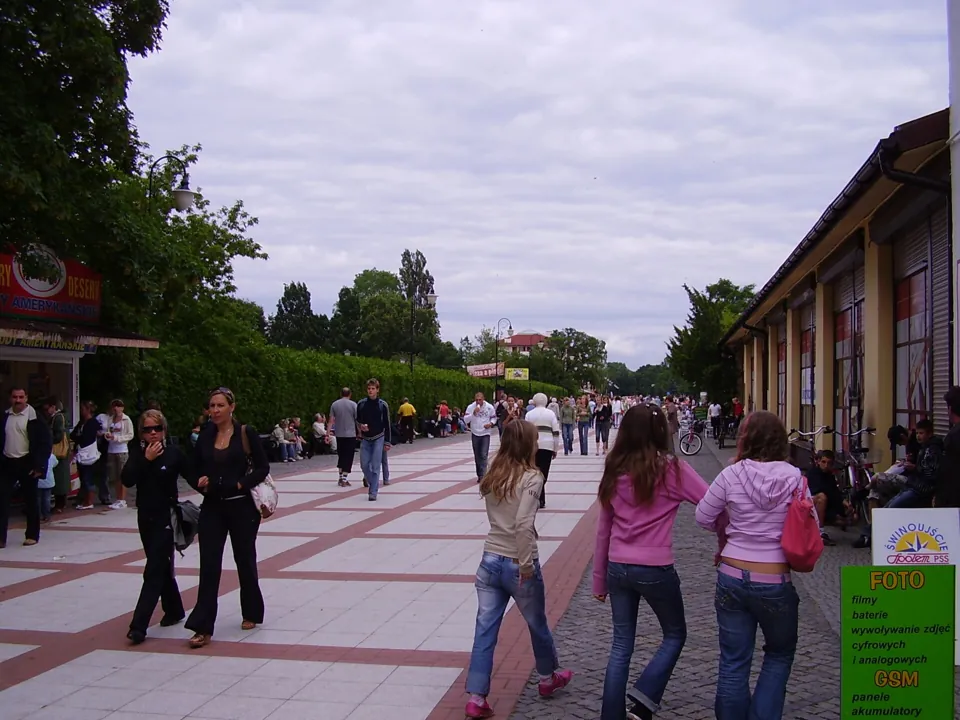
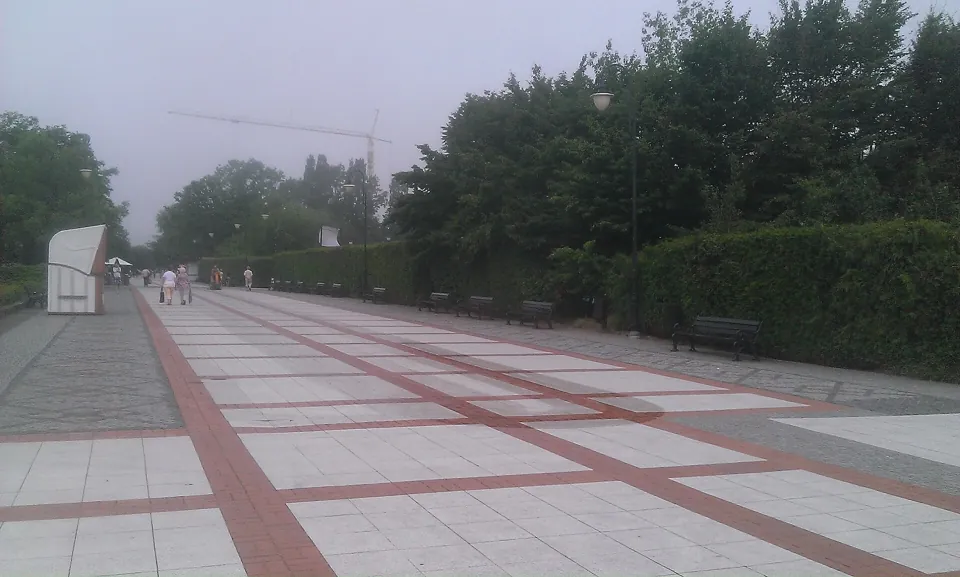
- The promenade – flat, wide and lined with benches. It gets busy in season, so keep your dog on a short lead. Early mornings and evenings are much quieter.
- Woodland paths behind the dunes – a strip of pine forest runs along the coast, with shade, soft ground and plenty to sniff.
- The Spa Park – old trees and avenues give good shelter from the wind. This is a spa area, so leads and poo bags go without saying.
- Along the shore towards Stawa Młyny – out of season one of the loveliest walks, with views of the harbour entrance and passing ships.
In the woods, think about ticks – check your dog’s coat after a walk, especially from spring to autumn. And never leave your dog alone in the car, not even briefly: in sunshine a car heats up quickly even outside high summer.
Water, sand and salt – practical details
By the sea a dog tires faster than you might expect. Running on loose sand is a proper workout, and wind and sun do the rest. A few things make the day easier:
- Fresh water and a bowl – dogs should not drink seawater. If yours starts, call it away and offer fresh water.
- A towel and paw care – salt and sand irritate the skin between the pads. Wiping the paws with a damp cloth after a walk is enough.
- Careful in the heat – on hot days the sand further up the beach gets very hot. Go out in the morning and evening instead.
- Swimming in the sea – not every dog is a strong swimmer, and waves and currents can catch you out. When the sea is rough, stay by the shore.
- In winter – pavements may be gritted with salt, and in the wind even a large dog gets cold quickly. Several shorter walks are often better than one long one.
The beach also offers things a dog should not eat: washed-up fish, shells, leftovers from beachgoers. A treat in your pocket helps your dog give up its find willingly.
A day trip with your dog to the German side of Usedom
Walking along the promenade to Ahlbeck is a classic – the border is a few steps from the beach and there are no checks. With a dog, though, it helps to know that the rules in the German resorts are often more detailed than in Świnoujście.
- Documents – when travelling with a dog between EU countries, an EU pet passport, a microchip and a valid rabies vaccination are required. Carry the passport even on a short walk across the border.
- Dog beaches – in the German resorts on Usedom, dogs are usually allowed during the bathing season only on designated dog beaches, signed “Hundestrand”. On the other stretches they are banned.
- Leads – on promenades, in parks and in resort centres your dog should be on a lead. This often applies on the dog beaches themselves as well.
- Fees – some German spa municipalities also charge a fee for dogs. The rules vary from place to place.
Season dates, dog-beach locations and fees are set by each municipality and may change. Check them before you go, ideally on the tourist information website of the resort you plan to visit.
Staying with your dog by the promenade
With a dog, the best base is one a few minutes from both the beach and the woods. A quick morning walk before breakfast, a longer outing during the day, an evening stroll along the promenade – all without getting in the car. Before you book, ask about the pet policy for the apartment you have in mind. Write to us – we will let you know whether and on what terms we can welcome your dog. You can find more about the town on our page about Świnoujście.