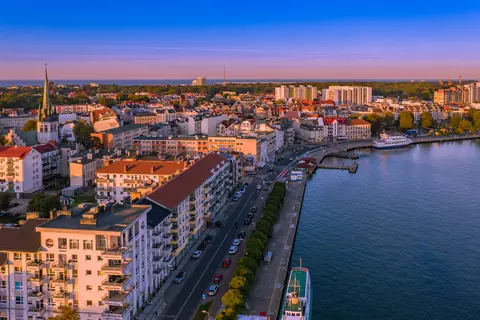
Spring
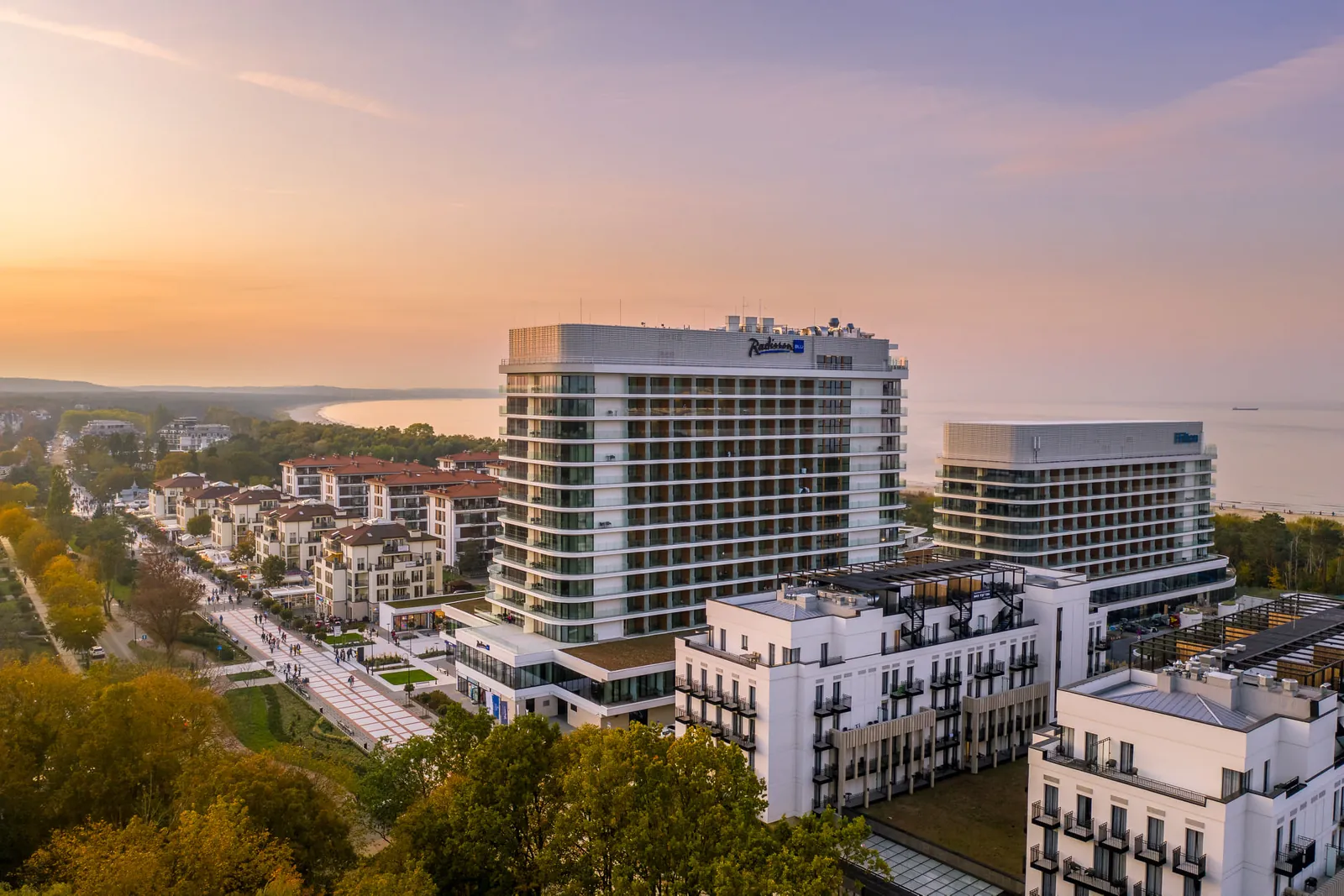
The Spa Park turns green and migrating birds pass over the Świna delta. The beach is still empty and the days grow longer quickly – a good time for cycling and long walks.
Guide for guests
A guide from your hosts
Our apartments are right by the promenade, so this guide starts where your day by the sea starts – and takes you further: into the spa quarter, across the border to the German Imperial Spas, by ferry to the other bank of the Świna and up to the cliffs of Wolin island.
We have gathered what our guests ask us most often. We don’t list opening hours or prices because they change every season – check them on the website of each place before you go, and feel free to ask us about anything else.
For more sights, walks and practical information (ferries, the tunnel, parking), see the Świnoujście guide on swinoujscie.net.
01
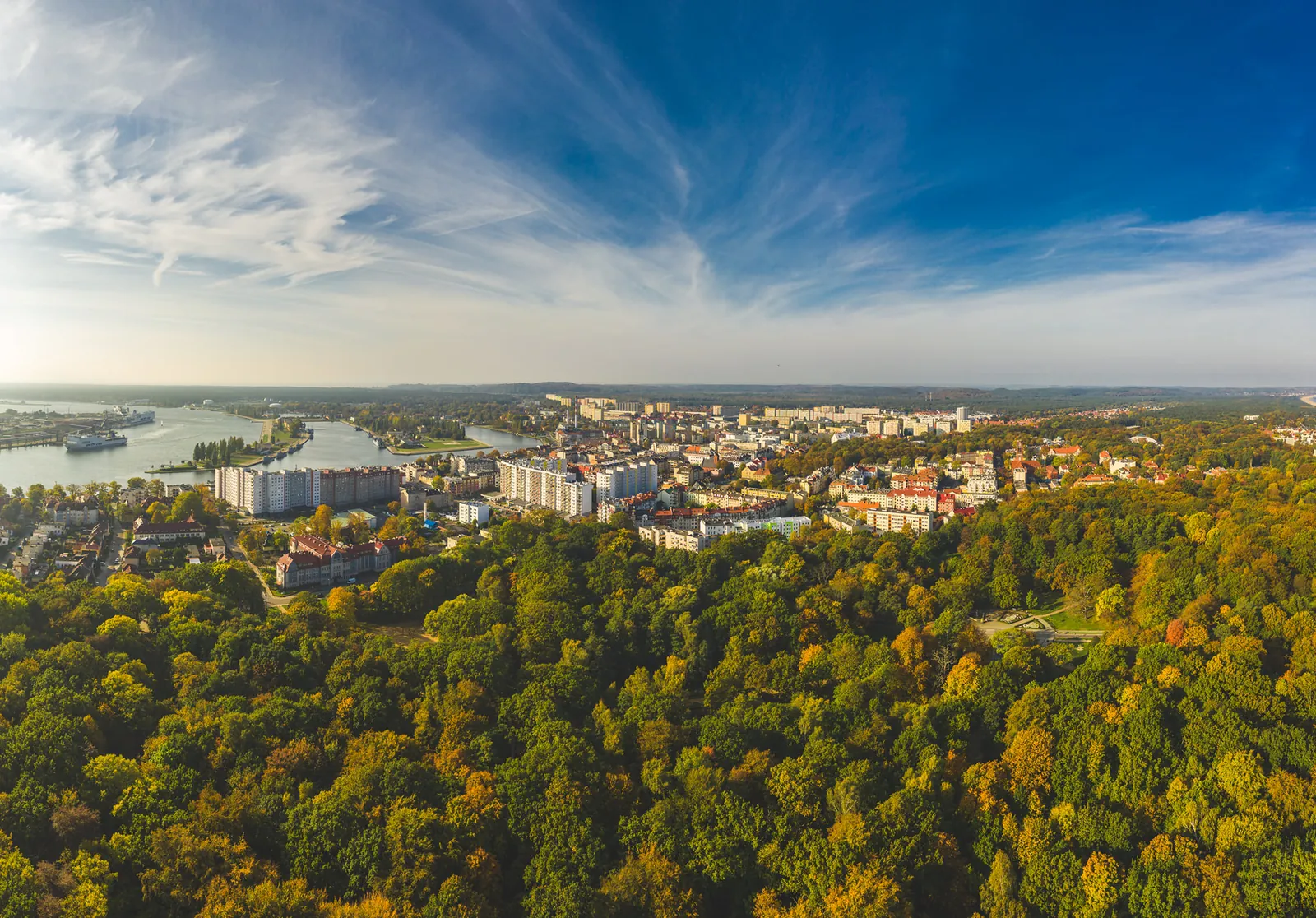
Świnoujście is a port town and seaside resort on the Baltic, spread over 44 islands and islets. The largest are Usedom, Wolin and Karsibór.
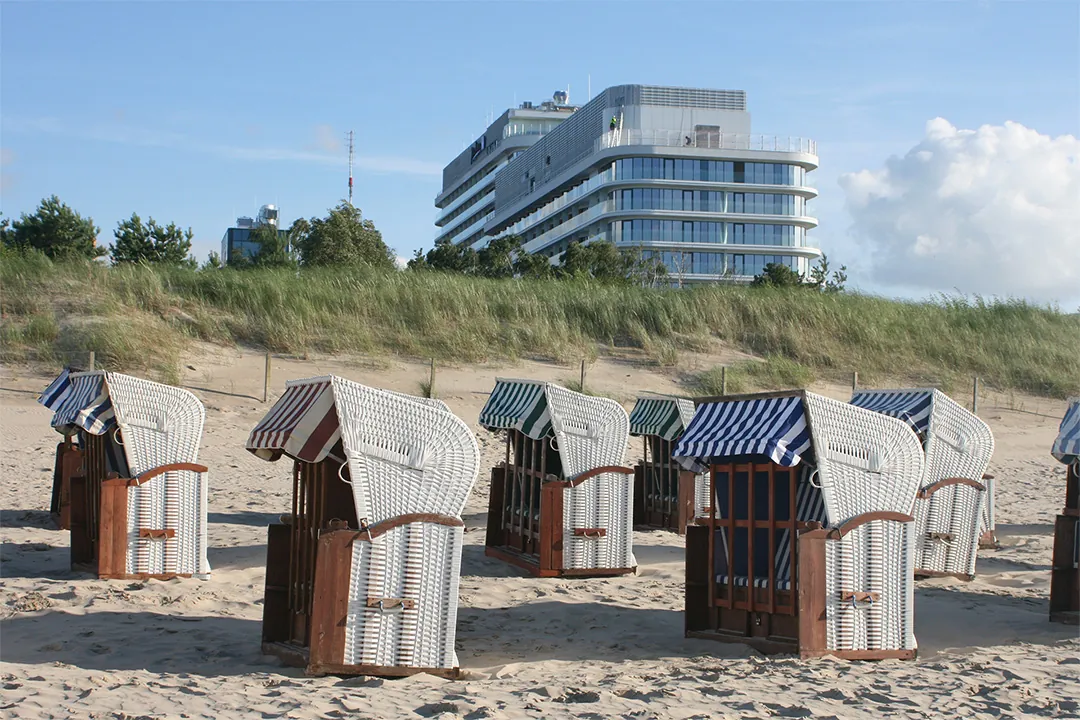
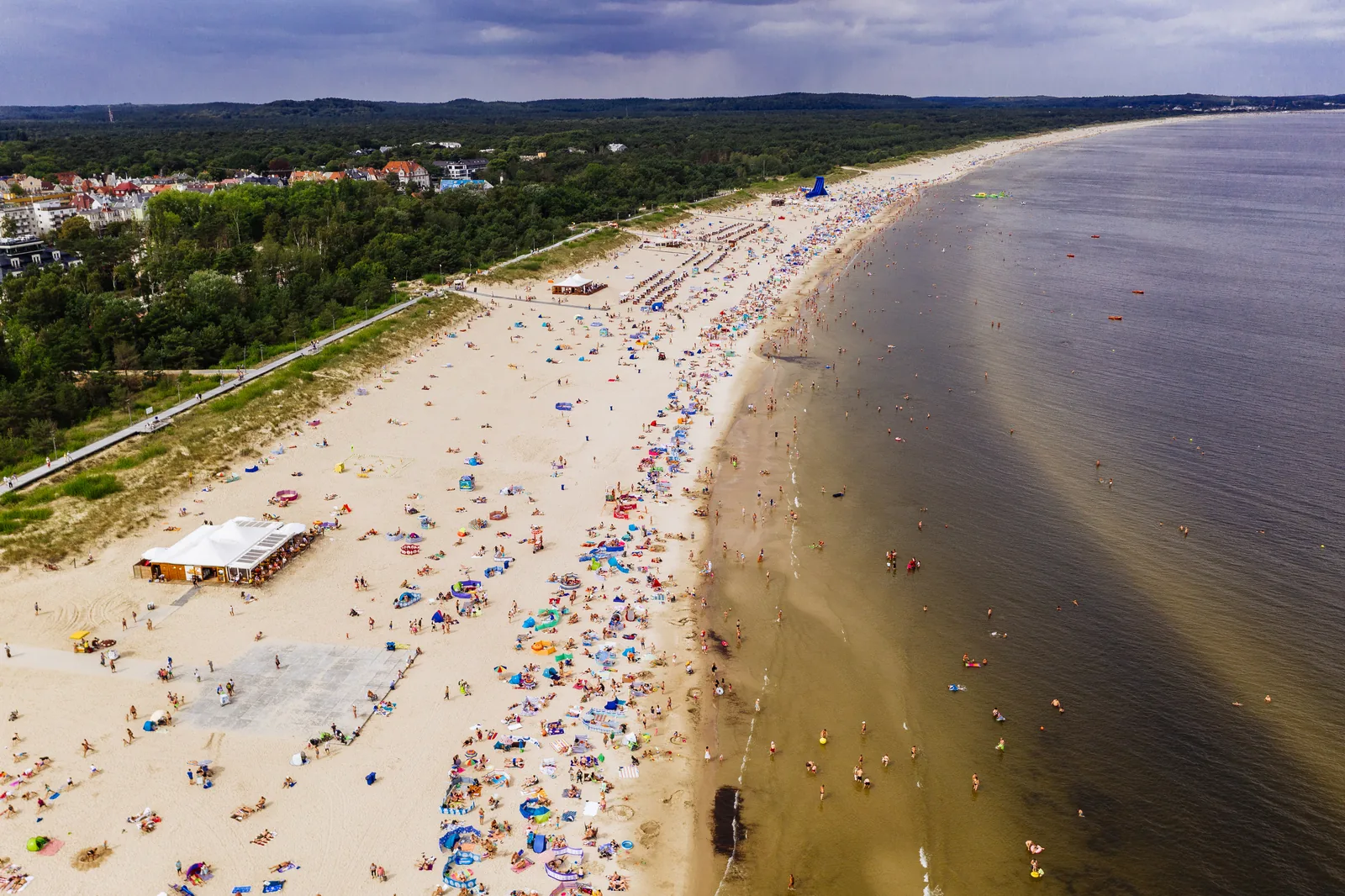
Guests come here from Poland, Germany and Scandinavia. The town is clean, safe and well kept. The main attractions are the sandy beach and the seaside promenade – but there is much more on offer.
02
When the weather is not right for swimming, there is still plenty to do in Świnoujście – depending on what you enjoy.
03
There are a great many restaurants, cafés, bars and snack bars along the promenade. A trip into the town centre is also worthwhile – there are places with good food there too. By the sea we recommend fish and regional cuisine.

04
Depending on the building, our apartments are anything from a few dozen to about 150 metres from the promenade. Your day by the sea starts without a car or a timetable.
Our apartments: Avangard Premium, Aquamarina, Platynowa Róża, Avangard Family, Aquamarina Family.
The promenade runs along the beach through the whole spa quarter. To the east it ends near the breakwater; to the west it carries on, with no barrier, into the promenade of Ahlbeck in Germany. It is flat and paved – easy with a pushchair and for anyone who walks more slowly – and cyclists have their own path alongside.
Right by the sea it is usually windier than between the buildings. Take something warm for a longer walk, even if it feels mild outside the apartment.
05
Świnoujście has been a seaside resort for almost two hundred years and still holds official spa status. Staying by the promenade, you are right in its historic part.
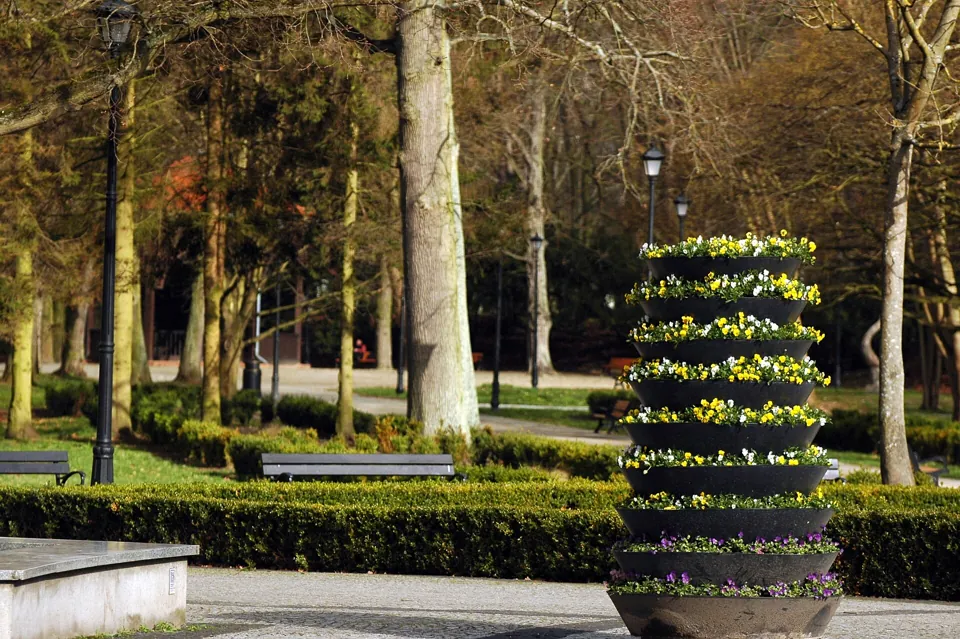
The first bathing season opened in 1824, and the first spa house was built two years later. Between the town and the sea a park grew to a design by Peter Joseph Lenné, one of the best-known Prussian landscape architects. Today the Spa Park covers about 58 hectares and is a listed monument, surrounded by a quarter of villas, guesthouses and sanatoriums.
Do you have a chronic condition, such as thyroid or heart problems or high blood pressure? Talk to your doctor before brine or peat treatments.
06
The town doesn’t shut after the summer holidays. Hotels, sanatoriums, restaurants and museums are open all year, the ferries run around the clock, and you will meet people out walking on the promenade even in January.
Most guests come in July and August – book your apartment well ahead for those months. If you prefer peace and quiet, choose May, June or September: the days are long and there is plenty of room on the beach. The town publishes current events at swinoujscie.pl.
The Spa Park turns green and migrating birds pass over the Świna delta. The beach is still empty and the days grow longer quickly – a good time for cycling and long walks.
High season: lifeguarded beaches, concerts and open-air events, café terraces along the promenade. Go to the beach in the morning or late afternoon – midday is the busiest.
September is often still warm and the sea keeps its summer heat. Then come the storms – afterwards, look for amber on the beach. A good time for forts and museums, too.
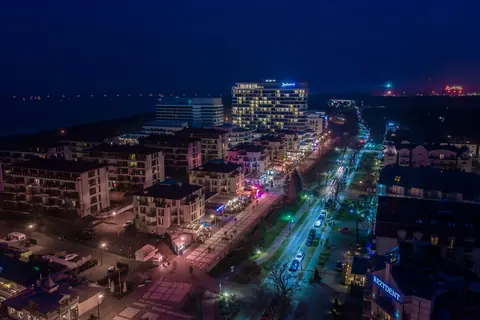
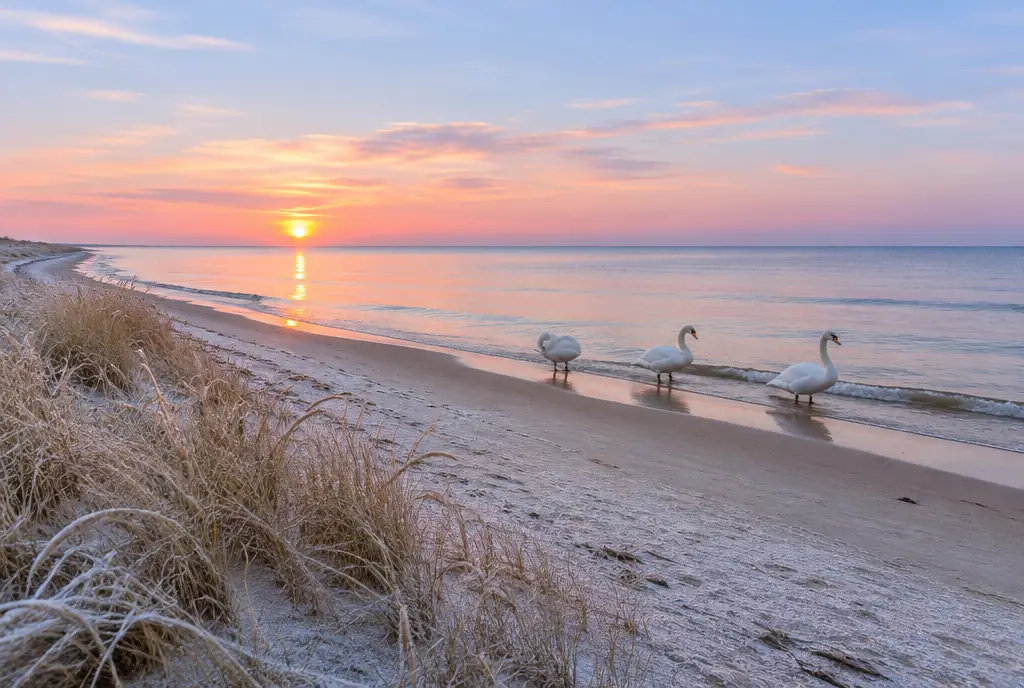
A wide, empty beach, swans by the shore and winter swimmers in the sea. After your walk: a pool, a sauna or a coffee in town. In December there is a Christmas market; the town announces the dates every year.
07
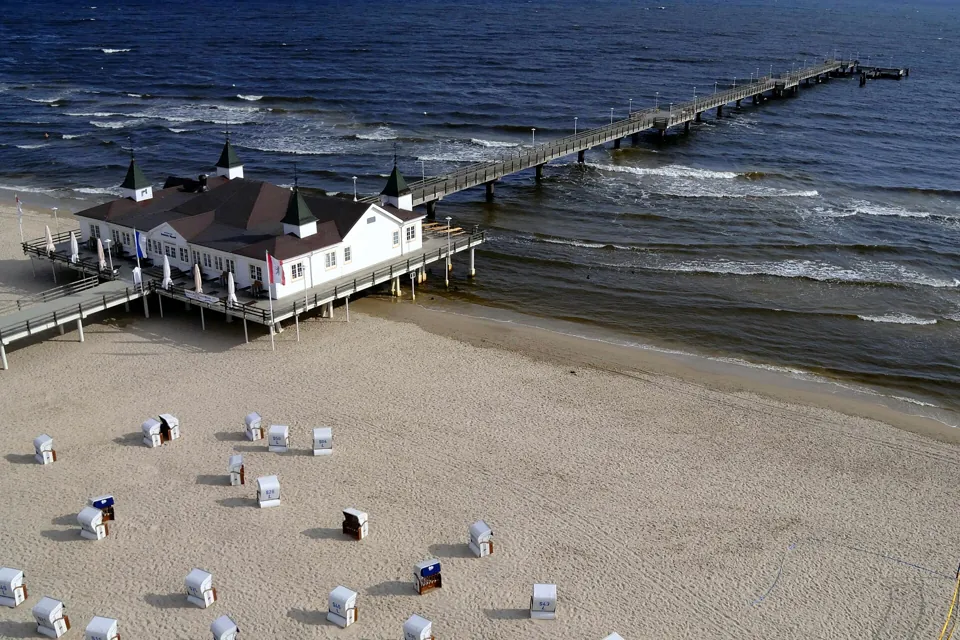
The promenade doesn’t stop at the border. Past a small sign with both flags lies Ahlbeck, then Heringsdorf and Bansin – three German resorts known as the Imperial Spas (Kaiserbäder).
The seaside promenades from Świnoujście to Bansin add up to about 12 kilometres. The route is flat and away from traffic, so children on their own bikes can manage it too. On the way you pass white seaside villas and three historic piers.
08
The town lies on both banks of the Świna. The beach, promenade, town centre and our apartments are on Usedom; the railway station, lighthouse, Gerhard Fort and the ferry terminal for Sweden are on Wolin island, in the Warszów district.
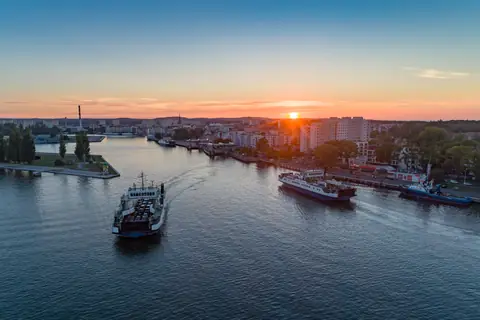
On foot or by bike you cross on the town’s Bielik ferries. The crossing is free, the ferries run all year round, day and night, and the trip takes just a few minutes – it is also the cheapest way to see the port from the water. From autumn to spring a bus through the tunnel replaces some of the crossings.
Since 2023 cars use the tunnel under the Świna. If you remember the queues for the big “Karsibór” car ferries, they are history: the old Centrum car crossing closed when the tunnel opened.
Heading over to Warszów in the evening? Check beforehand when you can comfortably get back – the ferries run less often at night.
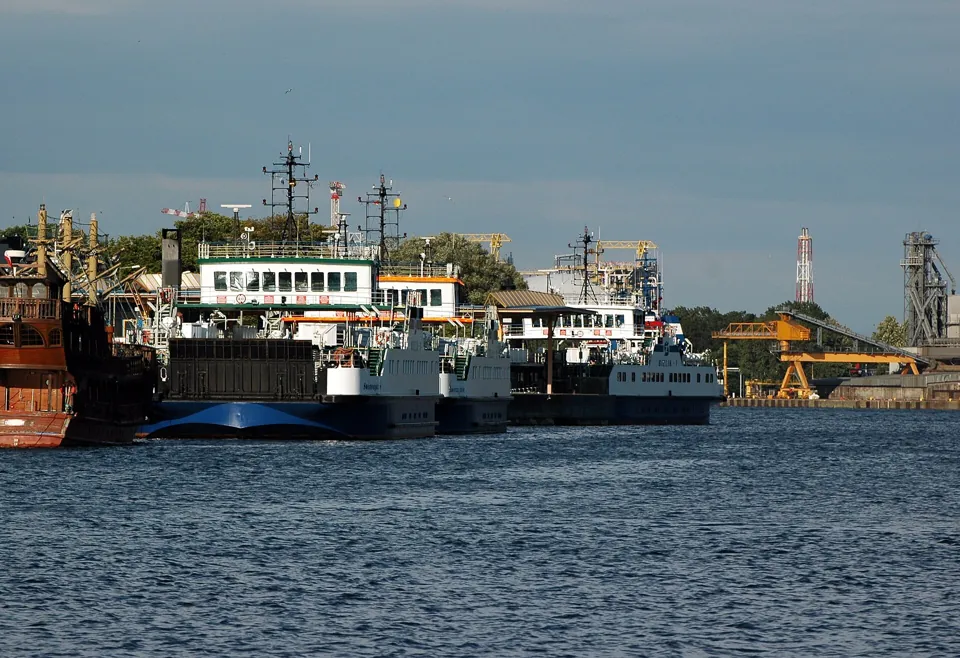
For pedestrians and cyclists, free, all year. Frequency depends on the season and time of day.
Current timetable: zdmiz.swi.pl (the town’s roads and shipping authority).
For cars, free of charge. It links the S3 expressway with Usedom. Pedestrians and cyclists take the ferry.
Passenger and car ferries sail from the ferry terminal in Warszów to Ystad and Trelleborg – handy if you are combining the Baltic with Scandinavia.
09
For most of its history the town was called Swinemünde and belonged to Prussia, later to Germany. In the mid-19th century a fortress was built here to guard the harbour entrance from both banks of the Świna.
Świnoujście has been part of Poland since 1945. The forts preserve the most of the old days: brick walls, casemates and grassy ramparts make a good history lesson even on a grey day, as much of the exhibition space is indoors.
Out of season the forts may have shorter opening hours – check before you go. It is cool underground even in summer.
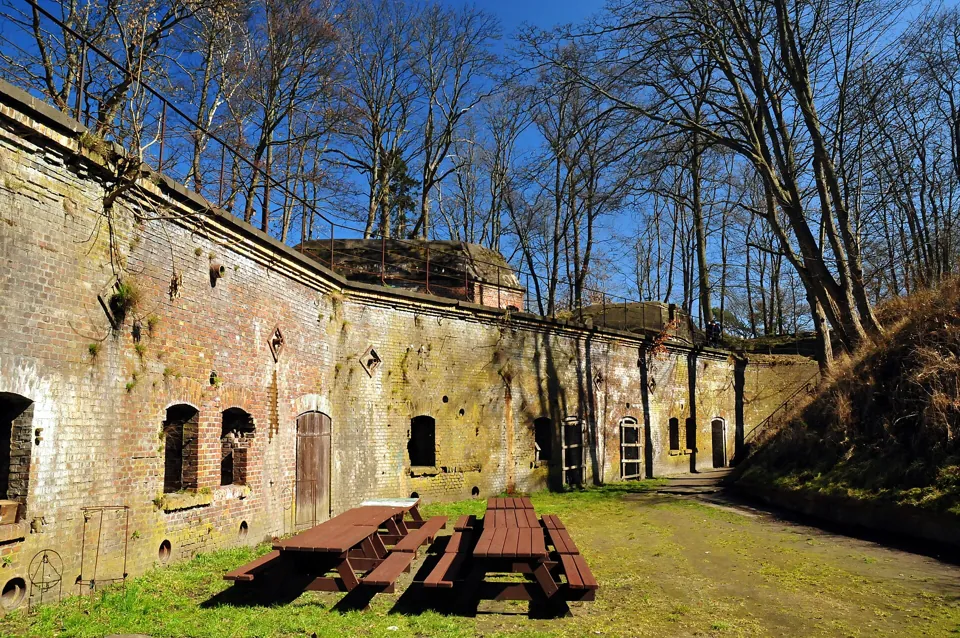
Also called the East Fort, it stands in Warszów next to the lighthouse. Built in 1848–1859, it is the best preserved of the three and houses the Museum of Coastal Defence. Reach it by Bielik ferry and a short walk.
A round brick rotunda from 1854–1858 on the edge of the Spa Park, close to the spa quarter. Inside there are exhibitions, and the building is striking even from the outside.
Built in 1856–1861 at the mouth of the Świna, right by the entrance to the western breakwater. Underground passages and bunkers from different periods – easy to combine with a walk to the Stawa Młyny beacon.
10
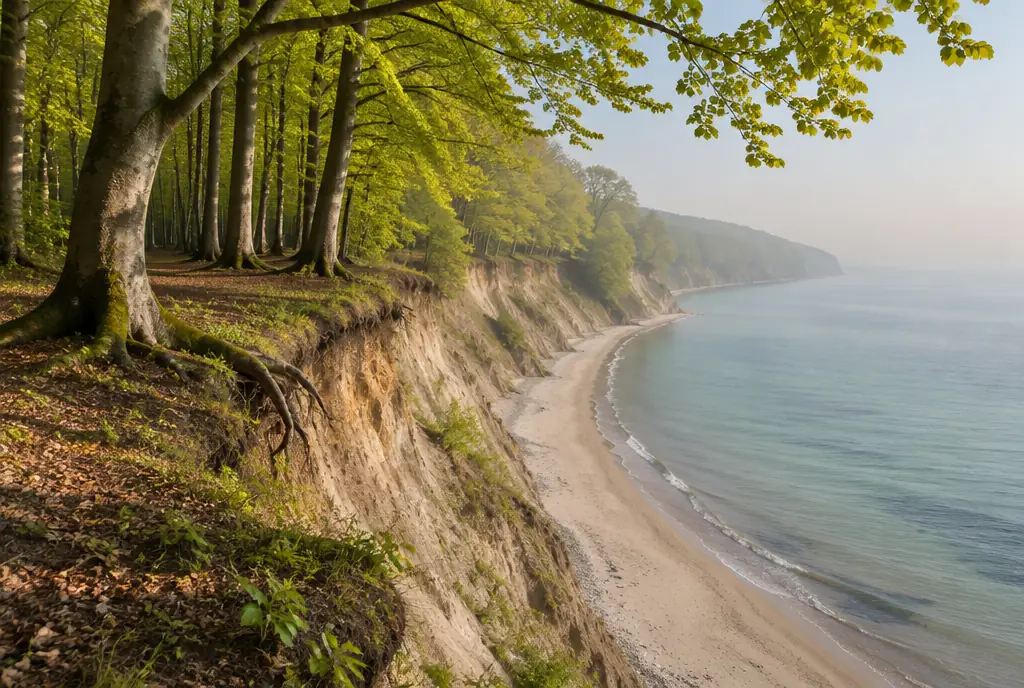
Across the Świna a completely different coast begins: high cliffs, beech forests and lakes on Wolin island. A national park has protected them since 1960 – a great idea for a full day out.
The highest cliff, Gosań, rises about 93 metres above sea level. The base for trips is the neighbouring resort of Międzyzdroje, with its pier and promenade. The park also includes the marshy islands of the Świna delta – a haven for birds right on the edge of Świnoujście.
Getting there: by car through the Świna tunnel, by train from Świnoujście station in Warszów (a walk from the Bielik ferry) or by bike on the Velo Baltica coastal route, starting with the ferry crossing. Stay on marked trails in the national park.
11
Our apartments, the beach and the town centre are on Usedom island. When planning your journey, check which bank of the Świna your route ends on – the rest is easy.
From Poland on the S3 expressway, which ends at the Świna tunnel; driving through to Usedom is free.
From Germany across Usedom island via Ahlbeck – straight to the correct side of the river. Ask us about parking near your apartment when you book.
Polish trains terminate at Świnoujście station in Warszów; from there take the free Bielik ferry or a bus to Usedom.
From Germany the UBB line runs to Świnoujście Centrum – on the same side as the apartments.
The nearest Polish airport is Szczecin-Goleniów, about an hour’s drive away.
On the German side of the island, Heringsdorf airport has mainly seasonal flights.
From Sweden: from Ystad and Trelleborg to the ferry terminal in Warszów.
After landing, drive through the tunnel to Usedom.
12
A suggestion for a first stay, with accommodation by the promenade. Swap the days around to suit the weather.
Day 1
Day 2
Day 3
Apartments for couples and families in the spa quarter, a few steps from the promenade. You book directly with the owner, with no booking-site commission.
Blog
In-depth guides to the topics on this page.