
Amber turns up on the beach in Świnoujście mostly after autumn and winter storms, early in the morning along the line of washed-up seaweed. Here is how to search, how to test what you find and why on this stretch of coast you collect it in a jar, not your pocket.
How amber ends up on the beach
Amber is fossilised tree resin, tens of millions of years old. It lies in sediments on the Baltic seabed and in the sand near the shore, and the waves carry it to land. Because it is barely heavier than water, rough seas lift it along with seaweed, driftwood and shells, and it is left wherever the surf drops that tangle of debris.
The coast of Usedom and Wolin is not as famous for amber as the Gdańsk area, but you can find it in Świnoujście too. Most pieces are small, the size of a pea or a fingernail. A big lump is rare – yet even a handful of little pieces after a morning walk makes a lovely souvenir.
When to look: storms, wind and time of day
Weather is everything. The best conditions come after a storm or several days of strong onshore wind, when the waves churn up the seabed and throw everything light onto the shore. That makes autumn and winter the real amber season: storms are most frequent and the beach is empty.
- The morning after a storm is the best time. The wind drops, the water recedes and nobody has combed through the seaweed yet.
- As the wind eases – during the storm itself the water's edge is dangerous, and the waves take back what they brought. Wait until the sea calms down.
- In sunshine – low light makes amber glow. Under grey skies it is hard to tell from wet pebbles.
In summer, with a calm sea, finds are rare. It still pays to look down after a stormy night, but for serious hunting the off-season is the better choice.
Where and how to search
The wide beach in Świnoujście has an advantage: plenty of space, and the line of washed-up material runs for kilometres. Look where fresh seaweed, small twigs, bits of reed and coal have collected – amber has a similar weight and lands in the same place. Usually that is the strip right at the waterline, or a bank of seaweed higher up where the storm waves reached.
- Sift through the seaweed with gloves or a stick. Amber often gets caught up in it.
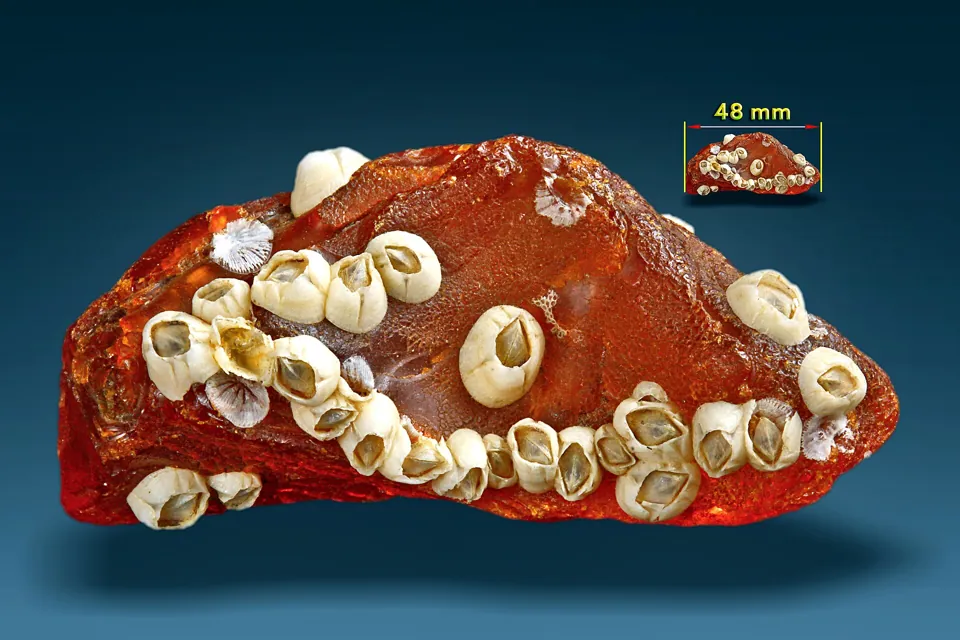
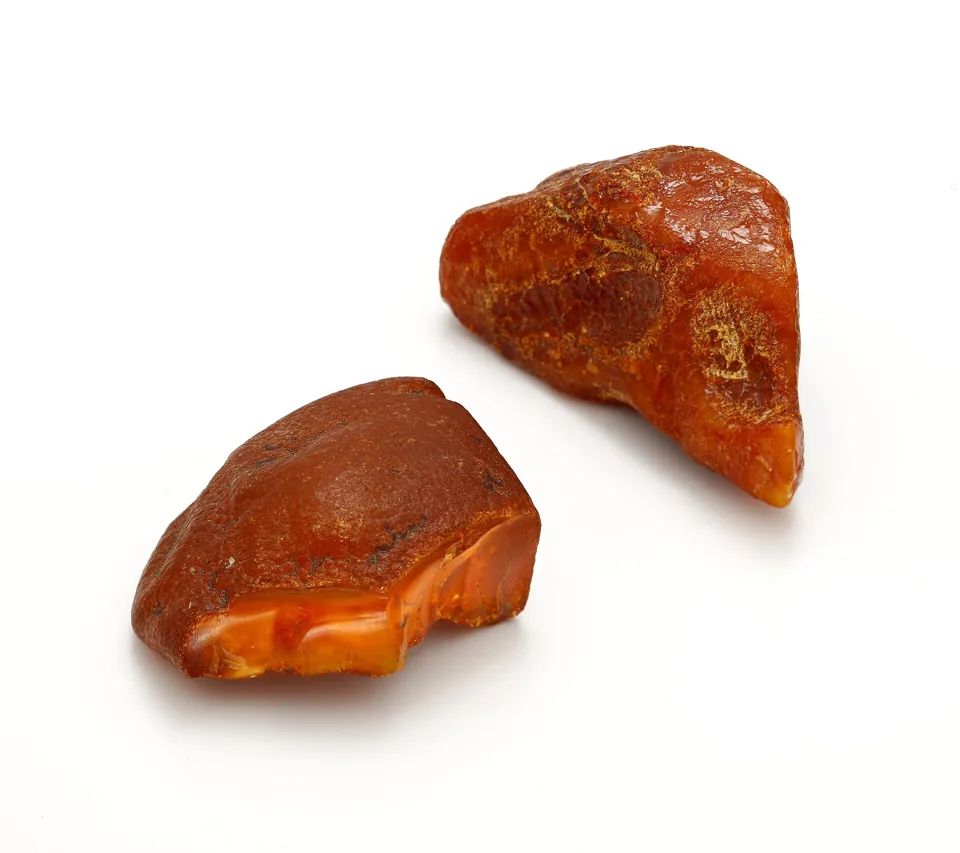
- Walk slowly with the sun behind you and watch for colour: honey, yellow, orange, sometimes milky or almost white.
- Some collectors wade into shallow water in waders with a hand net. In winter this is only for the experienced – cold water and waves are a real risk.
The easiest place to look is the wide beach of the seaside district, right by the promenade. Stay off the dunes, though – they are protected, and there is no amber up there anyway. Keep off the breakwaters when the sea is rough.
Real amber or a fake? Simple tests
On the beach, amber is most often confused with sea glass, plastic and yellowish stones. When buying souvenirs, watch out for imitations made of synthetic resin or glass. A few tests will help:
- Weight and warmth – amber is surprisingly light and warms quickly in your hand. Glass and stone are heavier and stay cool longer.
- Salt-water test – stir several spoonfuls of salt into a glass of water. Amber floats or hovers, while glass and stone sink straight away. Some plastics float too, so treat this as a first check only.
- Sound – two pieces of amber tapped together give a soft, dull click; glass rings.
- Static – rubbed on wool, amber picks up small scraps of paper.
- UV light – under a UV torch amber usually glows bluish or greenish.
The well-known hot-needle test leaves a mark, so skip it on nice pieces. When buying jewellery, shops that state the origin of the material and issue a certificate are the safest choice.
Important warning: white phosphorus looks like amber
There is one thing you need to know about this stretch of coast. During the Second World War, incendiary bombs fell around Peenemünde, on the German part of Usedom. Some of the white phosphorus they contained still lies on the Baltic seabed and washes up after storms. German authorities warn about it, and there are signs on the beaches of the German part of the island. People there have suffered serious burns after mistaking phosphorus for amber and putting it in their pockets.
Lumps of phosphorus are yellowish to brownish and look very much like amber. The difference is dangerous: once it dries, phosphorus can ignite by itself in the air, burns extremely hot and is toxic. Currents do not stop at the border, so the same precautions make sense in Świnoujście:
- Never put finds in your pocket or anywhere in your clothing. Collect them in a metal tin or a glass jar with a screw lid.
- Do not pick things up with bare hands – bring gloves.
- If a piece of “amber” starts to smoke, smells of garlic or feels warm, drop it at once and cover it with wet sand. Do not take it into your car or accommodation.
- In case of a burn, call the emergency number 112. Phosphorus penetrates the skin, so medical help is essential.
None of this is a reason to give up the hunt – a jar and a little common sense are enough. Tell children from the start that every find goes into the tin, not into a jacket pocket.
What to bring
- A jar or metal tin for your finds and gloves, ideally waterproof.
- A warm, waterproof jacket, a hat and shoes that can handle wet sand.
- A flask of tea – after an hour in the sea wind you will value it more than any attraction.
- A small UV torch if you want to test finds on the spot.
The best finds go to those who can be on the beach as soon as the storm dies down – often early in the morning. That is why staying a few minutes from the sea pays off. Take a look at our apartments by the promenade, and find ideas for the rest of the day in our Świnoujście guide.